
Applications
Put the radar on the vehicle or the pole.
Construction-machinery radar BSD for excavators, wheel loaders, and mining trucks, plus four catalog applications and two project extensions — ADAS cameras and remote monitoring.
Construction machinery
Radar blind-spot warning for excavators, loaders, and mining trucks
Millimeter-wave side BSD keeps people and light vehicles in the alert loop when dust, night, and tight yards defeat camera-only kits. Lodda RB403 is the primary self-developed sensor; Continental SRR630 stays available as an agency surround option.
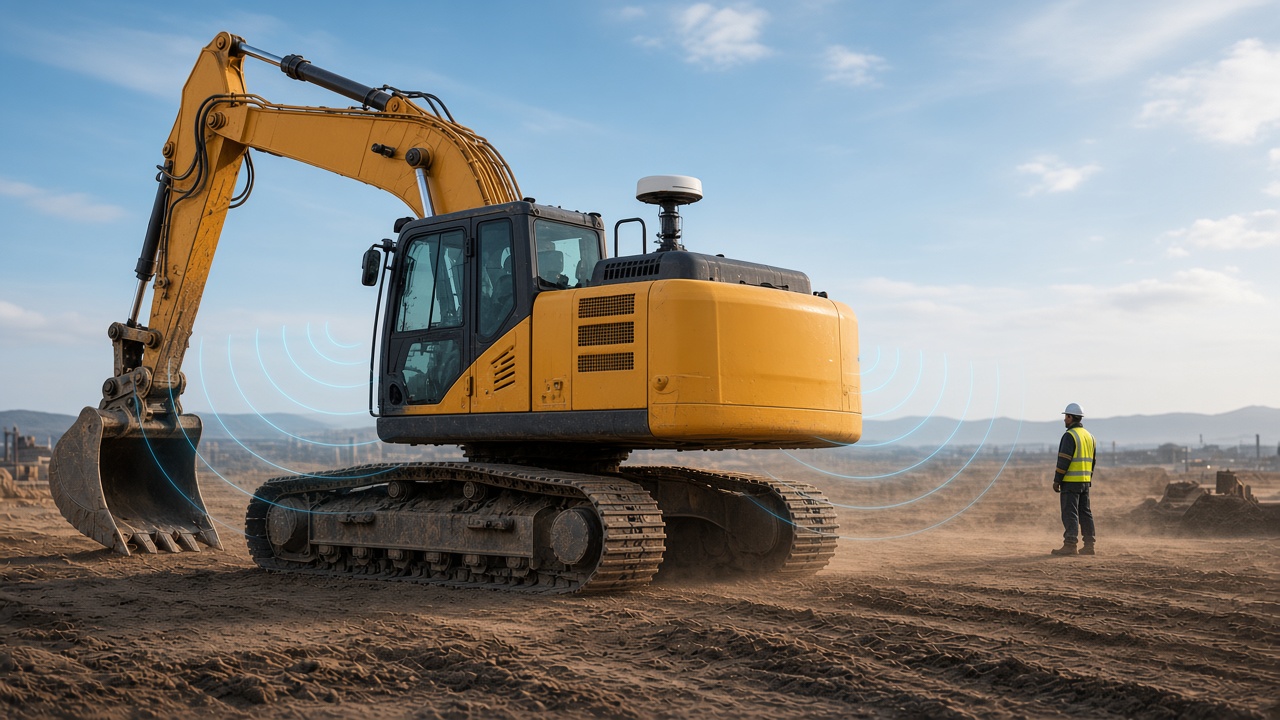
Excavator
Radar BSD for excavator blind spots
Excavator flank and rear BSD with Lodda RB403, built for dusty pits and night shifts.
Open solution →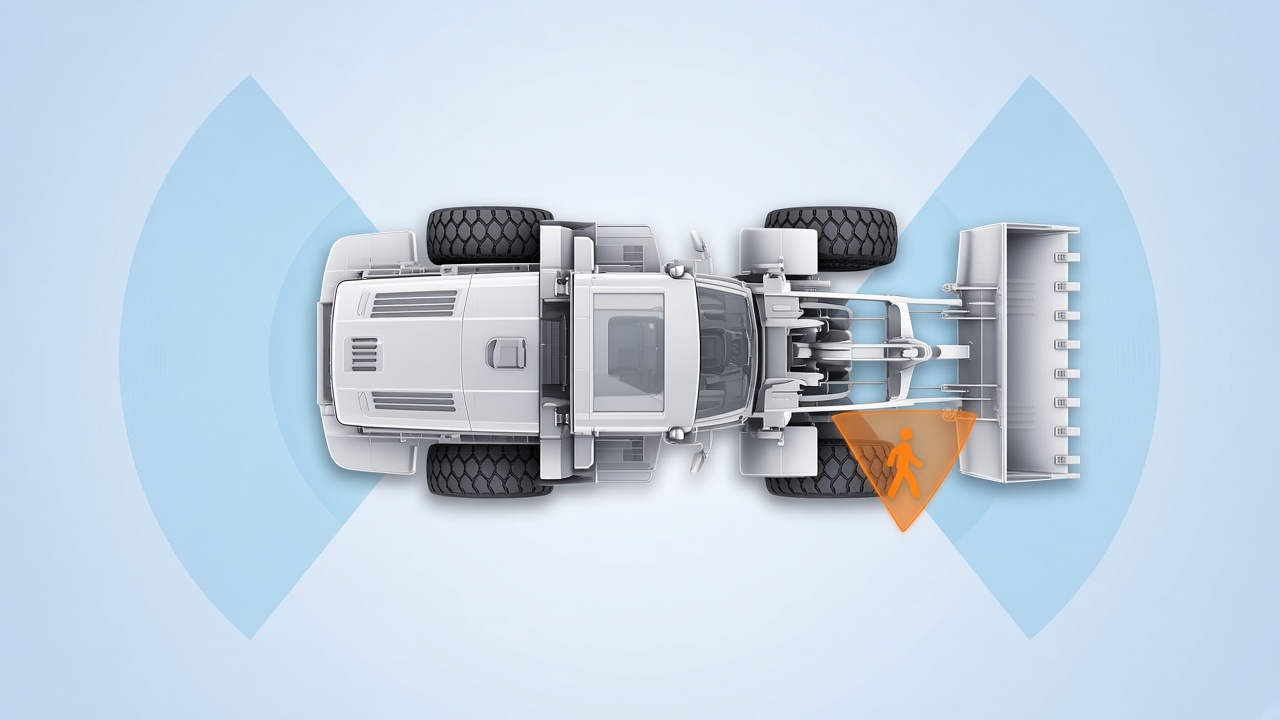
Wheel loader
Radar BSD for wheel-loader yards
Wheel-loader side and rear radar BSD for stockyards, ports, and busy plant roads.
Open solution →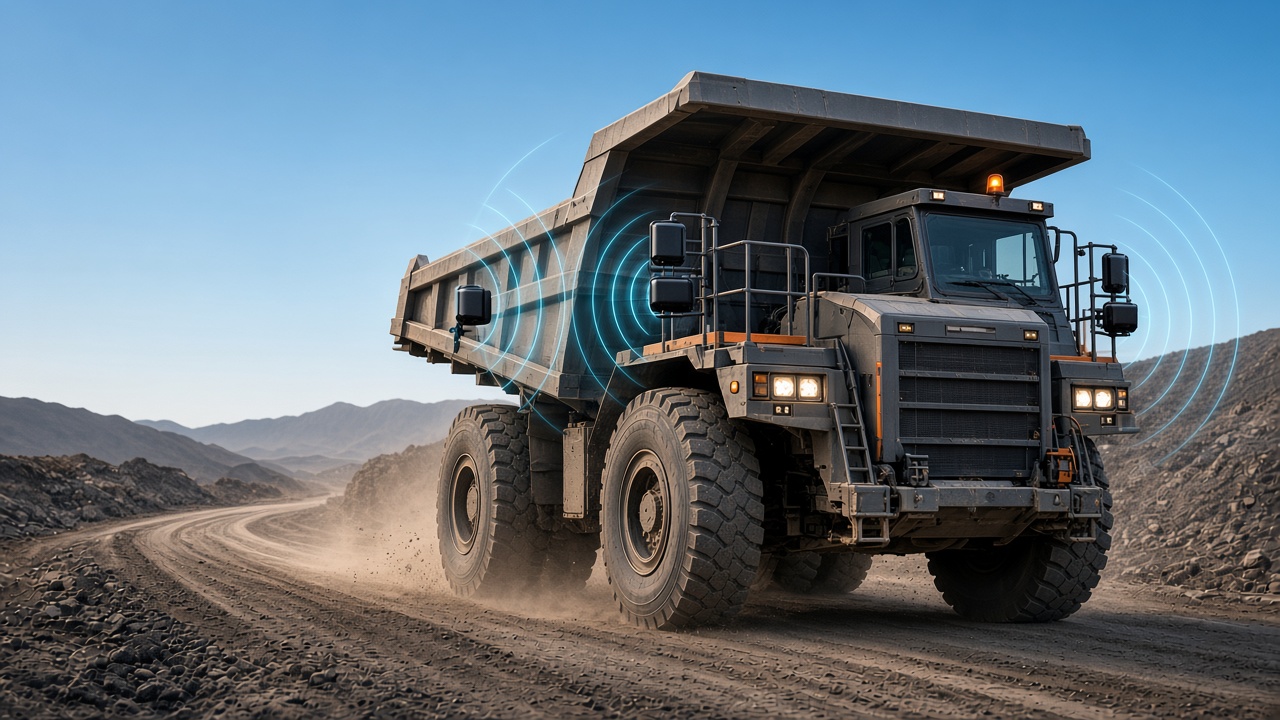
Mining truck
Radar BSD for mining haul trucks
Mining truck flank BSD with RB403 — built for dust, night, and mixed traffic on the haul road.
Open solution →01 — Commercial vehicles
Side blind spot on a truck or bus
The flank of a heavy vehicle hides people and bikes that a mirror only partly covers. The sensor for that job sits on the side, looks across a wide near field, and reports targets beside the vehicle.
RB403 is Lodda’s self-developed radar for that placement, positioned in the BSIS403T3 class. It is the product to ask for when the drawing should say Lodda. A Continental corner radar such as SRR630 can cover a surround brief instead, and it stays on the agency line, with Continental as the designer.
Field demo
02 — Integrators
Transmitter boards, sold as PCBA
Some programs want the radar front end and will build the antenna, the housing, and the host around it. Lodda sells two transmitter boards for that work.
LD800 A1 is the 80 GHz board: supply 9–18 V, CAN, a working range of about 0.7–60 m, and a remote figure up to 360 m where that figure is stated. LD800 S1 is the UA710 PCBA: 76–79 GHz class, detection from 0.8–10 m, and a field of about 100° by 30°. They are separate boards. Figures do not cross from one outline to the other.
03 — Roadside
Flow, speed, and radar-vision sites
Traffic Radar is the housed Lodda unit for a pole or a gantry. One marketing product covers the radar-vision, traffic-flow, and speed-enforcement family. Range is chosen as a tier: 250 m, 360 m, or 450 m. The enclosure is IP67 and the supply is 9–36 V.
The tier is an alternative, selected for the span of that site. Lane geometry, target size, mount height, and weather still sit inside the result. When the site also needs a picture or a remote desk, that work is quoted with the radar, as an extension.
04 — Agency line
Continental and AUMOVIO long-range and surround sensors
When the specification already names a Continental or AUMOVIO sensor, Lodda supplies it and helps with mounting, interface, and the rest of the delivery. The design credit stays with the manufacturer. Nothing in this group is a Lodda-designed radar.
ARS620 is the Gen6 long-range front radar, about 280 m, CAN-FD and Ethernet, with manual power of about 4.0 W and 4.5 W. SRR630 is the surround / RDI sensor in the 200 m class. ARS408 is the industrial 77 GHz long-range radar, 250 m far range on the AUMOVIO datasheet. ARS410 is the forward ACC-class radar with a thinner public record, about 170 m in published summaries. ARS548 RDI is the 3D/4D sensor: 300 m standard, elevation as well as azimuth, RDI over automotive Ethernet.
Related extensions
Cameras and a desk that is not at the pole.
ADAS cameras
A radar track often needs an image beside it: a fusion input, an evidence view, or a simple look at the lane. Lodda treats the camera as project hardware. The model follows the site — resolution, enclosure, and how the frames meet the radar — and this site does not invent a camera SKU to fill the page.
AI remote monitoring
Some installations need a person who is somewhere else: an alarm, a clip, or a lane state on a desk away from the pole. That remote view is an integration on top of the sensor. It is scoped with the radar program. It is not presented here as a certified analytics product, and it does not change the sensor specifications above.
Send the mount, the supply, and the range.
Name the vehicle or the pole, the interface, and whether the hardware is a Lodda design or an agency sensor. A short brief is enough to start a quotation.