
Insights
Radar for the mine-site blind spot: SRR630 and RB403
A practical sensing layer for haul trucks, excavators, loaders, and heavy trucks — written first for mining-rich markets such as Indonesia, and equally relevant in other mining regions.
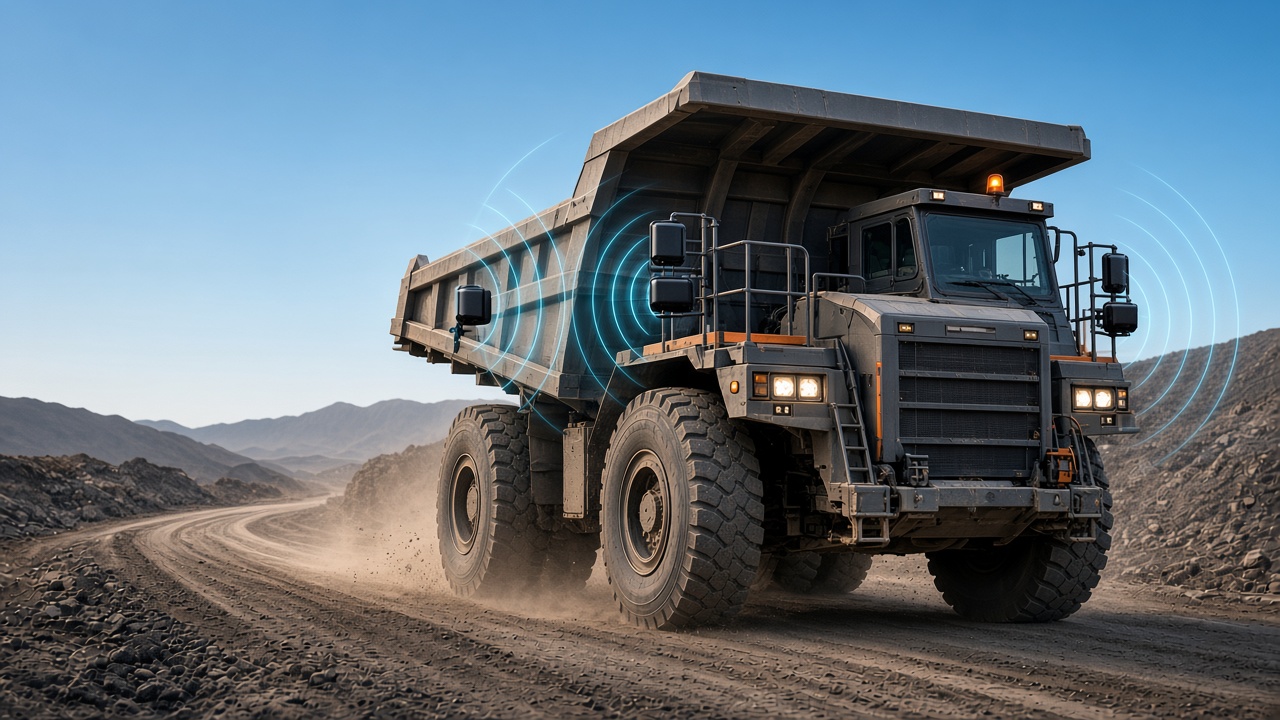
The problem is not only size. It is what the driver cannot see.
A mining haul truck hides pickup trucks and people along its flanks and behind its tray. An excavator operator watches the bucket; the swing and the rear stay dark. A wheel loader reverses all day in a crowded yard. Heavy trucks share haul roads, workshops, and pit-to-plant roads with light vehicles and ground crew.
Mirrors leave long stretches unseen. Cameras help when the picture is clear. On a mine site it often is not: dust, rain, fog, and unlit night shifts flatten video contrast. Millimeter-wave radar keeps a detection layer in those conditions. It is a complement to cameras, not a replacement, and not a full autonomous stack.
The job is warning. Tracks can drive a buzzer, a lamp, or an in-cab display, and the radar can sit on a CAN host where one exists.
Lodda approaches this work with two sensors that can be combined on one machine: RB403, Lodda’s self-developed side blind-spot radar, and SRR630, a Continental surround radar that Lodda supplies and supports.
Indonesia is a natural first market for this note — a mining-rich country, with fleets of haul trucks, excavators, loaders, and heavy trucks on those sites — and the same brief applies in other mining regions. This article does not cite accident statistics. “Ideal for mining” is an application recommendation, not a manufacturer guarantee.
What happens on the haul road, at the dump, and around the machine
On a haul road the scale of the blind zone is the first problem. A dump truck presents a long flank and a high tray. Service pickups and walkers can sit in that space while the driver looks ahead. Sensors on that chassis often sit high, so the radar still needs to see low or close objects near a large machine.
At dump points and workshops, fuel trucks, maintenance vehicles, and people work close to a stopped or slowly moving chassis. Near-field side coverage matters at those approach distances. On an excavator, swing and dig pull attention forward, and walkers can step into the side arc or behind the counterweight. Wheel loaders reverse among stockpiles and other machines, and loading throws dust into the air — exactly when a camera-only view is least trustworthy.
These are the situations in which we recommend a radar BSD layer: the sensing holds up when optical contrast collapses, and the alerts can be wired into habits the operator already uses.
Site pages on this theme:
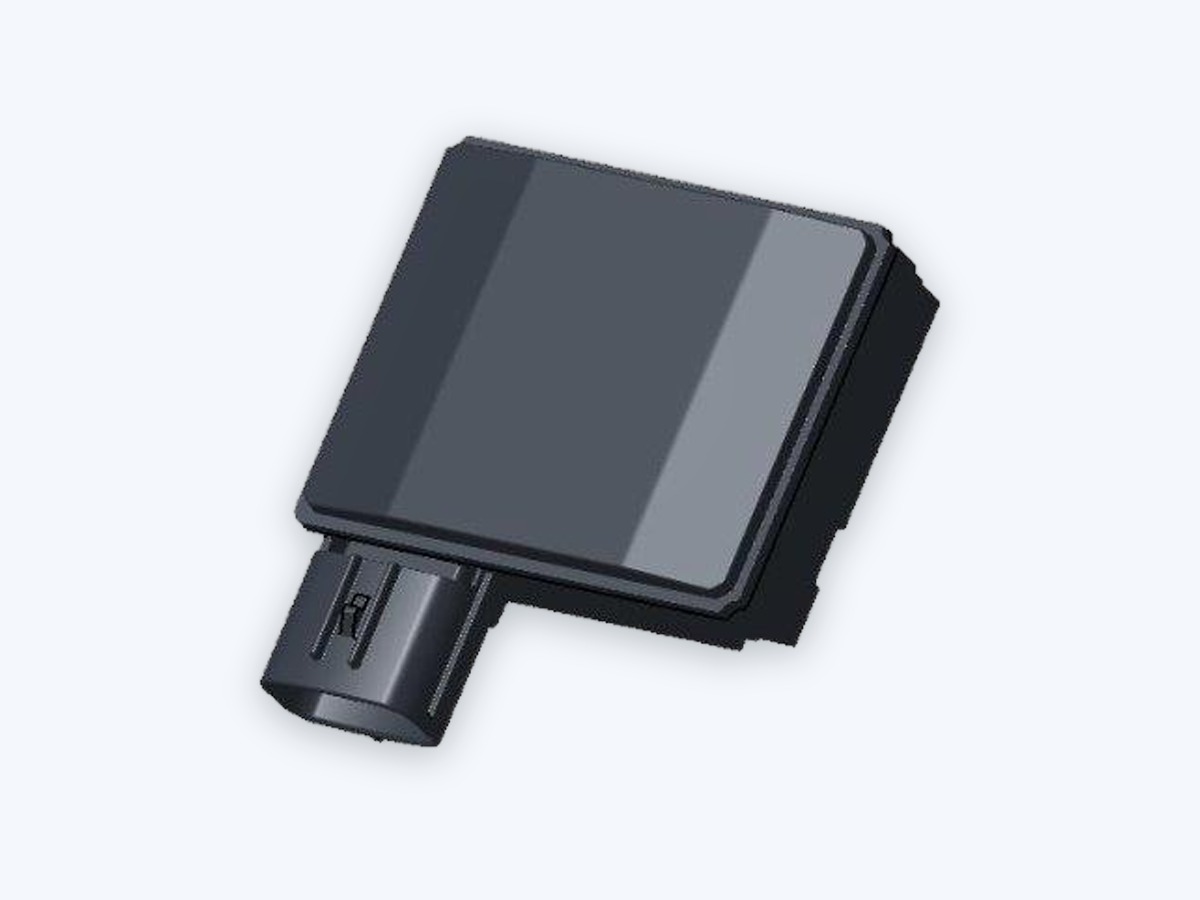
SRR630: a Continental surround radar, supplied by Lodda
SRR630 is designed by Continental. AUMOVIO Engineering Solutions lists the RDI variant as SRR 630RDI. Lodda supplies the sensor on its agency line and provides engineering support around mounting, interface, and delivery. The design credit stays with the manufacturer; it is not a Lodda-developed product.
It is the premium surround member of Continental’s SRR600 family: a corner and side radar for blind-spot, lane-change, and rear cross-traffic work, among the other surround functions described for that family. That is why we recommend it when a mine-site brief asks for a wider surround kit, more corners, or a rear package — as an application recommendation, not a manufacturer mining certification.
The figures below should be read as separate statements: horizontal field of view, vertical field of view, and range are not combined into a single performance promise.
- Horizontal field of view is ±81°, or 162° in total horizontal.
- Vertical field of view is ±30°, or 60° total. Lodda has measured this figure and holds it from Continental first-hand technical data.
- Range is about 200 m for car- and motorcycle-class targets. Pedestrian range is a separate, shorter figure: under 100 m on the family page.
- It is a 77 GHz-class sensor; the family page prints a 76–81 GHz operating band. The update interval is 50 ms.
- Automotive Ethernet is listed on the AUMOVIO RDI page; CAN-FD is also described for the family, so the harness follows the exact variant ordered.
- Outputs are described as an object list and RDI (ISO 23150) for the family.
- Supply is 12 V nominal; the outline without the connector is 70 × 55 × 20 mm; operating temperature is −40 °C to +85 °C.
- The manufacturer’s family page states functional safety up to ASIL-B (ISO 26262). Resale by Lodda does not create a new certification.
This article does not claim detection of vehicles at 200 m across the full 162° horizontal field, or at 200 m across the full 60° vertical field.
The tall vertical coverage is a practical advantage on a mine site: it helps when the sensor is mounted high on a haul truck, and it helps the same unit watch low or close objects near a large machine. Horizontal field, range, band, update, interfaces, outputs, supply, envelope, temperature, and ASIL-B follow the official AUMOVIO listing and the SRR600 family page, as repeated on Lodda’s product page. Unofficial reseller IP and power figures are omitted here, and no mining-specific certification is stated.
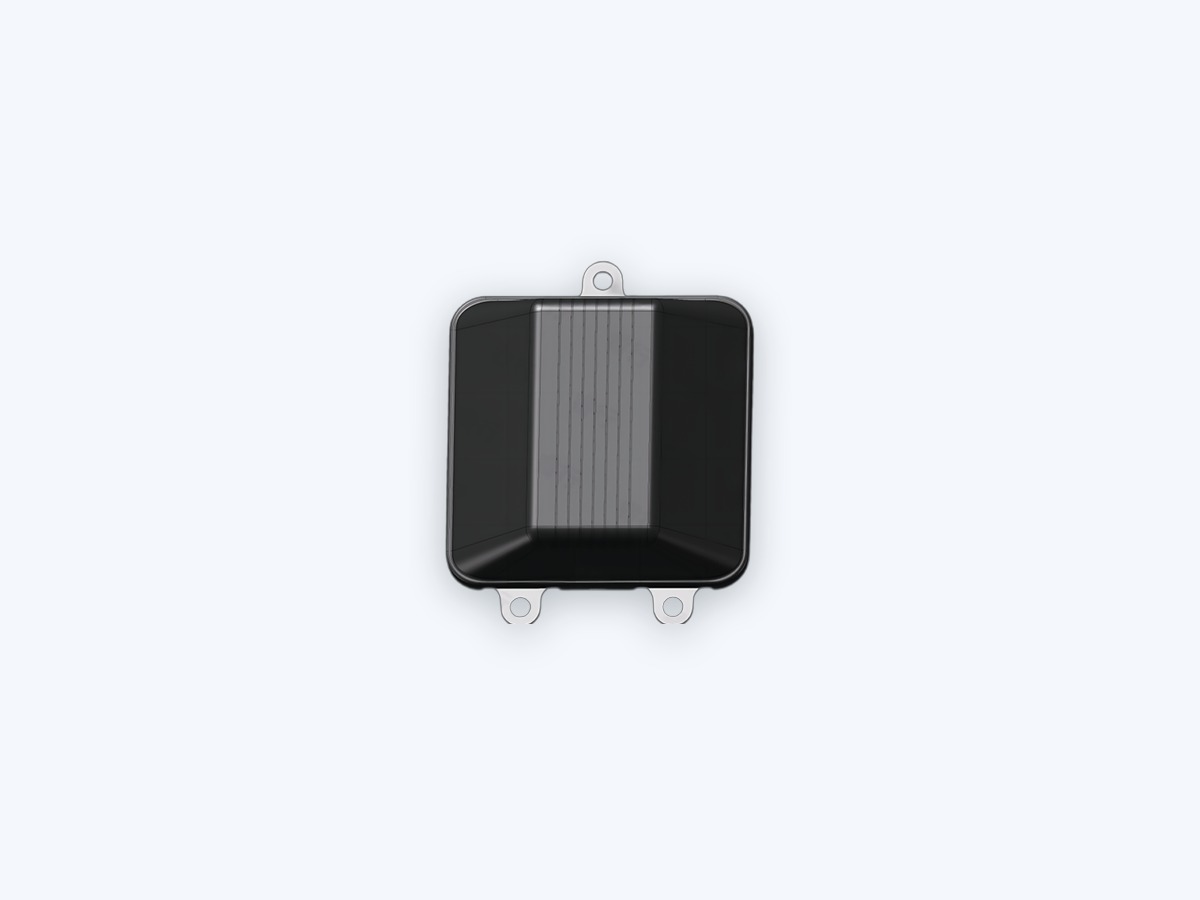
RB403: Lodda’s self-developed side BSD radar
RB403 is Lodda’s own side blind-spot radar, built for left and right side mounting on trucks, buses, and construction machinery. It is the product to specify when the drawing should say Lodda.
The sensing job is the commercial-vehicle side blind zone, adapted to large mining chassis and to excavators and loaders as well as to trucks and buses. It is a 77 GHz-class radar aimed across a wide side field. Measured range, field of view, supply, and enclosure are taken from the RB403 drawing at quotation; this article does not invent those figures.
Use RB403 as the primary near-field side sensor: the left and right pair that watches people, light vehicles, and other machines in the zone a driver or operator often cannot see. The story remains blind-spot warning, not a full autonomous stack.
How the two sensors work together
The two products answer different briefs, so they combine cleanly.
RB403 is the Lodda-designed side BSD layer: left and right, close to the chassis, sized for the near flank. On a haul truck, excavator, or loader, that is the near-side warning; coverage can be added at the rear when the machine’s motion requires it. SRR630 is the agency surround option. When the site asks for more corners, a rear package, or a Continental surround sensor already named on a drawing, SRR630 extends the kit. Lodda supplies it and supports the engineering; Continental remains the designer. When the unit sits high on a haul truck or another tall chassis, its vertical field of view of ±30° (60° total) is part of why we recommend it: the sensor can sit high and still see objects that are low or close.
A typical recommendation, confirmed against the vehicle drawing and interface, looks like this:
- A left-and-right RB403 pair for near-field side BSD on the haul truck, excavator, loader, or heavy truck.
- One or more SRR630 units where a wider surround or rear envelope is required, or where the program already specifies a Continental SRR600-family sensor.
- Alerts into a buzzer, a lamp, or an in-cab display, and a CAN connection where the cab already speaks that language. For SRR630, Ethernet RDI may be the native path on the RDI variant; CAN-FD is also described for the family, and the ordered variant decides the harness.
Nothing in this package claims to drive the machine. The value is a consistent warning sense that continues when dust, darkness, rain, or fog take contrast out of a camera view. For buyers in Indonesia and other mining-rich markets, the practical advantage is one-stop supply: a self-developed side radar and a Continental surround radar, with engineering support and a single conversation about mounts, cabling, and the cab interface. Mounts and cable routing are scoped with the project; they are not a substitute for an unpublished enclosure rating.
Talk through a site
If you are scoping radar BSD for a haul fleet, a pit excavator, a loader yard, or a mixed heavy-truck program, send the vehicle type, the corners to cover, and the interface the cab already uses.
Related pages: